The Curse of the Overachiever: RIP - Jovan Belcher

my prayers go out to the Chiefs
One of my friends recently sent me a request for a blog post, which made me realize - I need to start taking requests!  I'm happy to write about most things, especially if they're controversial.  Please email or comment if you have any ideas because on sidenote - we give the people what they want.

Sidenote - When keeping it real goes wrong.  I recently posted a "senior mentor essay" on sidenote, which I submitted for my Fundamentals of Patient Care class.  The objective of the assignment was to, "Write an essay expressing the student's attitudes and opinions about caring for elderly patients."  I figured this meant I should tell them my honest feelings of struggling to overcome my self-centerdness so I could authentically serve other people.  Fast forward a few weeks to my class evaluation - my instructors considered "putting me through remediation (code word for fail) for my writing skills and sending me to the writing center."  I thought this was funny.  

So anyways, back to my friend's request.  She sent me an article debunking the trendy positive thinking movement.  Here's my understanding of positive thinking - overpower any negative thoughts with buzz words like "stay positive."  

Here's my problem with positive thinking.  Serenity now - insanity later (see clip).  Bottling up all your problems and covering it up with warm and fuzzy mantras is only a temporary solution.  

Soceity is too afraid to deal with serious shit like suicide.  It's even too afraid to talk about anything resembling a negative emotion - we have to cover everything up with positive thinking movements.  But when negative emotions are neglected, it doesn't end there.  

As I've talked about before on sidenote - physician burnout and physician suicide is a big problem.  The stats say that ~400 physicians commit suicide every year, giving medicine the highest rate of suicide for any job.  And the hidden curriculum starts early - up to 30% of medical students screen positive for depressive symptoms.  

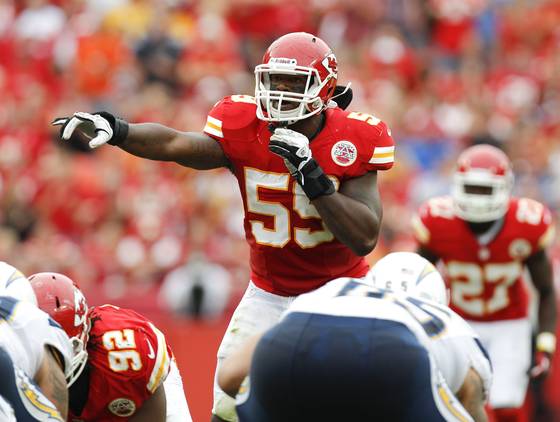
Young doctors have a lot in common with star athletes - at every stage of life they've been praised for being talented, hard working, and having their life together.  Yet, people like Belcher happen all the time, and everyone screams out - but he had such a good life! 


eat or be eaten
Doctors and athletes are a lot of things - but they are not invincible. I've never been a professional football player - but I imagine it's like medicine.  A world of talented individuals where weakness is looked down upon.

Rugged individualism might work for med school when you need time to cram in fun facts for Step 1, but what about residency - when you're facing the human side of medicine, and patient die for no apparent reason on the operating table?  Is it really right to tell those surgeons to just stay positive? 

Shouldn't we encourage them to keep it real and seek help when life is hard?

See you on the other side,

from ken

now taking requests for future blog posts. please comment or email.

Why MD/PhD?

Med school is SO long - why spend another few years getting a PhD?  I've gotten this question a lot since I started med school.  Like applying to straight MD programs - there are plenty of good BS reasons to apply to MD PhD programs.  [The REAL reason I want to go to med school]

MD/PhD - the rough outline by year
Sidenote - if you're wondering what MD/PhD programs are - see image on right - they are essentially med school (MD) and school for scientists (PhD) so we combine medical and scientist training.  We exchange spending a few extra years in school with free tuition.  

Here on sidenote, we give the people what they want.  Once we pare away all the BS of med school admissions, there are 3 reasons why I chose to pursue two doctorates, when I would have been equally as useful with an MD.  

1- The incredible tution bill of med school.  The average 2010 med school graduate left with $160,000 in debt.  15% of all med school graduates left with a quarter million dollars of loan money.  And when you graduate med school you're still a resident which means you make in the neighborhood of $50,000, not quite doctor money.  And don't forget that loan money is definitely not interest protected.  It keeps growing and growing and..  

As an MD/PhD student, the government pays my medical school tuition bill.  Thanks tax dollars!  
running gels gets a bad rap.. but I love science

During my admissions year I kept hearing that the financial incentive to pursue an MD/PhD wasn't worth it, but it still seems smart to me.  Spend 3-4 years working in a lab, which I love, and come out with a free MD, which my wife loves.  Everyone wins.

2- I needed a backup plan.  One day, I really want to be a scientist and run a mega lab to the tune of 20+ scientists, Cell papers by the month, and grant money flowing in like Brandon Roy's bank account.  The point is - I only want to be a scientist if I can be a good one.  

If you've ever worked in a lab you know the 40 year old burned out postdoc that's bitter at the research world for screwing over his opportunities to publish in Science/Nature/Cell and get independent grants.  You also know that guy questions his life on a daily basis - should he quit and go into advertising?  teaching?  

great book
I didn't want that to be me, but frankly it's only so much in my hands.  Science is a volatile career, and a high impact publication is usually the result of right-place-right-time phenomenon.  (See Malcolm Gladwell's Outliers).  

I really want to have a family some day - preferably sooner rather than later - so I wanted to make sure I had a viable backup plan before I tried to launch a risky career in science/academia.  At the end of the day I want to do science so I can use my brain to help people, so I figured being a doctor would be a good alternative - still intellectual and still helps people.

3- I believe I do things right and other people don't.  Don't hate me for it. I despise med school because all we're doing right now is learning the status quo and how medicine has been done for years.  I know we have to learn this because we need to pass boards.. but it is BORING.  Sidenote - when I run academic medicine we will be done with standardized tests and memorizing rote BS. Instead med students will learn, you know, actual medicine.  

I'm a cynical med student, and I know in 6 yrs I won't be the kind of intern that's going to see the medical world and accept it at face value.  I know I'll be a pissed off resident, and a pissed off attending.  There's a lot to be cynical about in science, but at least science is trying to come up with new solutions.  I wanted to be part of a world that asked, what if we could come up with a better way to do this?

Overall conclusions.. perks to the MD/PhD - it saves $ and you get to do science.

See you on the other side,

from ken

Relationships in med school pt 4: When doing less is doing more.


700 pg behemoth
"The secret of basketball
is that it's not about basketball."
- Isaiah Thomas

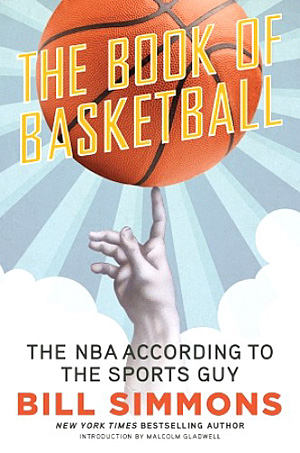
One of my favorite all-time books is Bill Simmons' The Book of Basketball.  BS endlessly analyzes and ranks the top basketball players.  My favorite idea is that the secret of basketball is about a conscious choice a player has to make everyday - he has to fight off the pressures of the world and avoid thinking the world revolves around him. It's about LeBron James deciding that it might be better to pass to a wide open Shane Battier than trying to take on another double team for the highlight reel. It's about Chris Bosh deciding he'd rather be a glorified role player in Miami than being the man in Toronto.  

--

Like all med students - I'm a born and bred overachiever.  In third grade I got in trouble once for bad handwriting - so I had to write a cursive f twenty times.  I sat in a corner and filled three double sided pieces of paper with a cursive f.  It was a third grade version of eff-you mode.  

Similarly, in my marraige I'm the kind of guy that wants to be a super husband. Washes the dishes.  Makes the bed. Does sweet things. Listens to all the logical complaints my wife has. Cleans the bathroom. I want all the gold stars.  

But being in med school where the top resource is time, it's been a challenge. I feel like I'm always scrambling for time, or walking around ragged tired.  

ironing the shit out of that shirt
As I got busier Katie started being really helpful and willing to take care of more stuff around the house. I help out with the chores a little bit on Sunday, when I take a day off from studying to focus on my more important pursuits of blogging and watching basketball.  But other than that one day Katie wants to be super domestic - making home made christmas presents, home made cookies on a weekly basis, and making sure my stock of ironed shirts is always ready to go. 

Since then, there's been a lot more sitting around and watching league pass in my life.  Time that used to be filled with doing the dishes, cleaning the bathroom, and other fun chores.  But by giving up my need to be super husband - it's kept me a lot more sane and more pleasant to be around, so the time katie and I do have to spend together ends up being high quality.  We have a lot more fun.  

We make a good team.  ..Or at least I make a lazy husband.

See you on the other side,

from ken

House of God Book Review and thoughts on burnout


The House of God is a pseudo fictional memoir that takes a cynical look at the training of young doctors. The protagonist Roy Basch is a naive grad of BMS (best medical school) working as a first year intern at a hospital called the House of God.  The story chronicles Basch's year as his mental health spirals down due to poor working conditions, brutal superiors, long hours, and a severe lack of time to spend with friends and family outside the hospital.  

Shem drives home the point that internship takes up so much time and mental energy that doctors lose their humanity. They slowly get isolated from friends, family and even fellow interns- and when that isolation happens, they move from thinking this is crazy to I am crazy. One intern in the House of God commits suicide because he bottles up the madness of the hospital within himself, he eventually can't handle it, and has no other ways to release that stress.  

So the moral of the story - everyone needs to deconstruct all the craziness going on around them. Cope or perish.  

According to some quick some studies I pulled up on pubmed - 45% of physicians experience at least one form of burnout: emotional exhaustion, feeling unaccomplished, and losing empathy for humanity. Half of all doctors are feeling burned out!  That has to be terrible for healthcare?  On top of that, male physicians are 50% more likely to commit suicide than the general public, and female physicians are 200% more likely!  

Sidenote - Residency training may be when the stress of dealing with patients peaks, but what if the real root of the problem is earlier?  What if interns are arriving at their residencies already so burned out from med school that they're already on the highway to that depressed, burned out, suicidal hell?


white coat ceremony - the bright eyed days
Before I started med school someone told me to enjoy the first few weeks - everyone is bright eyed and happy to be there, still friendly, and tan from the summer.  Now, almost three months into school - no one's that tan, you can start to pick out the gunners, and the bright eyes are slowly fading to zzz.  

I've been getting a lot of that frustration and burnout myself. I drafted out an entire post complaining about being burned out, then I decided it sucked and wasn't up to public consumption.  Then I hated myself for being terrible at writing, and then I hated myself again for procrastinating instead of studying.  Self-hate has to be one of the top signs of burnout.  

The last block definitely burned me out.  I was talking with my similarly overwhelmed and burned out classmates - and we literally couldn't figure out what to do to unburn out.  I try to study all day and fail - I watch recorded lectures in the corner while checking gmail, MUSC email, facebook, grantland, the NYTimes, really I'd rather look at anything than the syllabus. 

Last block we had a lecture on physiatry - the cushiest specialty in medicine, you play volleyball every weekend, and you get tons of $$. Physiatry is looking better and better everyday.  

I need to come up with some half-baked ideas to fix physician burnout.  

See you on the other side, 

from ken

physiatry life

1st Annual NBA bold predictions


After my brutal MLB predictions - Adrian Gonzalez wins MVP, Red Sox win the WS - I decided to stop making predictions, and just start going for bold predictions.  That way when I'm wrong I don't feel as bad about myself, and if any of them are right I look like a prophet.  So here's the first annual NBA bold predictions:

James Harden leads the league in scoring.  The Thunder basically told him they'd rather have Ibaka.  In his first game since then, he scored 37 and had 12 assists playing with a bunch of guys he's never met.  Arguably Andrew Bynum should be in more F U mode, but he's probably chilling on his couch already getting ready for his guaranteed max offer next summer.  Harden in eff you mode all season could be a sight to see.  Plus - he'll shave the beard to increase the hype. 

so much more aerodynamic
Spurs win the west.  Maybe it's not bold to some people, but out of 32 espn analysts only 1 picked the Spurs.  The Thunder took a step back losing Harden.  Ibaka is good, but he doesn't have that same edge Harden has.  When push comes to a shove in a big playoff game, it just doesn't feel like you could rely on Ibaka to come through - offensively OR defensively.  At the same time, Harden HAS come through at those moments already.  At age 23.  I feel like they should've gone with Durant-Westbrook-Harden core than Ibaka.  The Lakers - could easily be the most dominant team in the west, but they need a healthy point guard.  They need to keep that core 4 healthy and they need to destroy the other team whenever they're on because it doesn't look like Antawn or Steve Blake are going to provide much help.  So who else could win?  Maybe the team that won 21 games in a row? 

The Chicago Bulls repeat as #1 in the East.  They tied for the best record in the league with only 60% of Derrick Rose.  Who says they can't hang in there around the middle of the conference until January when Rose comes back?  This guy cried at a rehab update, there's no way he's sitting out a season when he could be playing.  Plus, I love every single Adidas commercial about him.  Don't try to tell me that guy is not a gamer. 


Brooklyn misses the playoffs.  If Deron Williams doesn't have this miraculous return-to-the-olden-days season, or worse - gets hurt, they're left with a core of Brook Lopez and Joe Johnson.  It's a conglomeration of guys who want the celebrity and cash of playing in Brooklyn. 

Chris Paul gets traded.  I don't know enough about NBA trades and salaries to tell you where he'd go, but if the Clippers get off to a slow start, I could see it.  They've clearly committed to Blake for the long-term, and CP3 doesn't really play a Blake-style game.  He wants to run efficient defensive minded basketball.  Some team will be willing to take a risk and get in on the CP3 sweepstakes early. 

Carmelo Anthony wins MVP.  As Lin and Stoudamire move out of the picture, this becomes the Melo show again.  They went 18-6 with Mike Woodson, don't tell me they couldn't sneak into the 2 spot in the east.  If they pull that off - who else would get more hype, and isn't that really what the MVP award is about? 

See you on the other side,

from ken

Senior Mentor Reflective Essay

We had an assignment where we had to reflect on our feeling towards providing healthcare to the elderly.  Here's my essay:

Reading the three vague questions demanded of us in the senior mentor reflective essay, I can’t help but assume the administration just wants us to ramble on about our thoughts on providing healthcare for the elderly - so I plan on doing just that.  I apologize in advance if I don’t answer all three questions.

BMS
In 1978, Samuel Shem famously wrote a pseudo fictional memoir called House of God, in which he told one of the first tell-all books of the insanity of internship.  Shem covers a wide range of the insanity - the depressing isolation, the extreme coping methods, the reality of how little medicine can actually do - but one of his favorite targets is GOMERS, which stands for Get Out of My Emergency Room.  GOMERS are elderly patients that are suffering and actively dying, but medical technology is somehow keeping them alive.  The doctors and nurse taking care of GOMERS are frustrated that they take up so much of their valuable time and attention.  The question they ask is, “Shouldn’t they be allowed to die with dignity?”

My view on healthcare towards the elderly is, unfortunately, similar to Shem’s.  It is frustrating to me whenever I see off-hand statistics that mention the surprising concentration of healthcare dollars that are spent on the last six months of life.  If there is not enough money to go around to provide healthcare for everyone, don’t we need to ration our resources, and invest the money where it’s actually going to help our society?  On a simpler level - should we even be taking care of people that can no longer control their bowels, or worse - their breathing?  I imagine I am not the only young person that sees the world through this cynical lens.

Who deserves healthcare? ...a loaded question
These frustrations over serving an aging population that is no longer able to serve society like it used to, is one of the main reasons driving me towards something bordering on a fear of the elderly and an in interest in pediatrics.  I can't help but relate to the doctors portrayed in Shem's House of God and predicting that I too will fall into the same pessimistic bunch of docs.

I understand the situation in real life is much more difficult than crunching numbers - seeing one of your loved ones passing away, it must be difficult to let go.  There must be a point when it becomes more than just being about efficiency.  To that extent, I have never had close relationships with anyone over the age of say, 60, and being so unfamiliar, it is definitely difficult for me to relate to this age group.  

On a sidenote, I want to believe in the value of every life - young, old, black, white, rich, poor - whatever.  I definitely cannot say I live a life that embodies that ideal, but it is an ideal I wish to attain.  I sincerely hope the Senior Mentor activity will change my views on serving the elderly.  They have certainly done their part to serve out society, and they deserve to be taken care of in their dying days.  I also hope the senior mentor activity will help me understand the issue of dying.  Is it possible that it's not wrong to let GOMERS die?  Don't the elderly deserve the respect of dying with grace?  

It's hard to reach any substantial conclusions in a rambling reflective essay, but here's what I've come up with: I see a lot of personal conflict in serving elderly patients, and I hope that will change in the coming years.  

See you on the other side,

from ken

Insane in the Sarcolemma: test week #2


So we just started test week #2 - musculoskeletal aka f-load of anatomy.  For non-MUSC readers, before every test we get a week off from classes and small group discussions to focus on studying.   I thought the last study week was crazy.  [link to test week #1]  Turns out that was only the beginning.  

don't waste your time
The last test went well - the class average was an 88.  That block was mostly a review of undergrad, but this musculoskeletal block has been completely different.  The material is almost all new, and there's a TON of it - one of my friends estimated 650+ powerpoint slides of anatomy - slide after slide of muscle, nerve, bone, ligament, artery, repeat.  It's hard to describe how hard it is, but I consider myself a fairly intelligent guy, and I've had to wake up at 5 AM just to cram in enough time to study.  And I just scored a 40% on the metabolism self-assessment.  

In a sense, this was the block med school got real and lived up to the hype.  It definitely got hard.  

exactly how I feel
But.. how real is it?  Anatomy seems pretty useless, although you could maybe sell me on it - I guess we should understand the structure of the body.  On the other hand, I'm about 200% sure glycolysis has nothing to do with being a doctor.  Personally, I want to be a cancer scientist - and glycolysis/TCA cycle/oxidative phosphorylation is even meaningless to me.  Sidenote - I'm pretty sure the Warburg effect is controversial, which isn't surprising considering Otto Warburg came up with it 50 YEARS AGO.  I would not be happy to see it on an exam of modern science.  Anyways, It might help to have a general understanding of metabolic principles - but to know the exact name of each enzyme?  Absolutely useless - just wiki that shit.

So why do we learn this?

Maybe we're trying to develop a crop of doctors that's planning to dominate bar trivia - I swear my classmates would be the top 160 trivia masters in Charleston.  We are REALLY good at memorizing facts.  But if any of you have complaints about your doctors not spending enough time with you, or not having a human side - don't hate the player, hate the game.  I'm surprised any doctors come out of this training system with a lick of humanity left in them.  

But anyways, here's my simple answer to why we're trained in this outdated style - because the class of 2015 learned it, and the class of 2014 learned it, and the cl...  It's the status quo.  But is producing trivia robts really what med school should try to accomplish?  Do patients want robot doctors?  Should students be investing $200,000+ in loan money for this?  Don't we deserve to get training that will actually help us be better doctors?  

See you on the other side,

from ken

What is sidenote?


This post is for all of you who have wondered - what is Sidenote?

Here's how I define the writing tool "sidenote": A few years ago my friend Amulya and I had an epic email chain where we rambled about our relationships and life philosophies.  In the middle of our email, if we had a more interesting idea we'd simply write "sidenote" and take our rambling on a 180.  Sometime these sidenotes would be completely off the wall and only interesting to one of us, but other times it'd turn into the best part of the email.

for some reason beautiful places
produce lots of ideas
And similarly, here's how I define the blog "Sidenote": it's about a lifestyle where it's ok to stop whatever you feel like you should be doing and instead follow random sidenotes, because that sidenote might be more interesting, and interesting is better than important.  

Here's how I reached that conclusion:

During college I read one of my top 3 favorite books ever - Tracy Kidder's Mountains Beyond Mountains.  The short synopsis - biography of Dr. Paul Farmer - who provides American quality healthcare to the destitute poor in rural Haiti.

After reading it I was immediately convinced that this was what I HAD to do with my life.  I started organizing a service trip to Haiti, wrote about Haiti for the school newspaper, blah blah blah - by the end I had became a major social justice advocate at Kenyon, but I was also left burnt out.  

Near the end - I hosted a group conversation called "What is Social Justice?"  It brought together campus leaders to discuss how we ought to live out a life of social justice.  

Here's what I came up with:

"Ask not what the world needs.  Ask what makes you come alive... then go do it.  Because what the world needs is people who have come alive."   - Howard Thurman, civil rights activist

The point was that Kenyon didn't need more people giving money to Haiti, but it did need more people who were really engaged in their lives. 

Since then I've been trying to shape my life to be consistent with that belief - interesting is better than important.  My life is looking less and less like a traditional activist - I have minimal interest in working at homeless clinics, I don't vote in elections, and I'd rather read Bill Simmons or Cell than the New York Times - but I still consider myself an activist.  

i might have analyzed this too much
Thinking that the world can be fixed by simply giving more money to the poor or showing up to church on Sunday is simplistic at best, and counterproductive at worst.  I think there's a truth out there somewhere that could turn the world around, but it's complex and I have no idea how to get there.  I feel like if anyone's ever going to get there it's going to be people who are on fire.  And I think sidenotes are life's way of showing us what we care about.

Uh but anyways, that's what sidenote is.  I might have analyzed this too much.

from ken

Why Kenyon College kicks ass

from Liberal Arts

Top 3 question I've been asked since moving from Portland, OR to Charleston, SC for med school - Where'd you go to college?  

I've learned that this question has three right answers - Clemson, USC (hint: not LA), or token small Christian college in South Carolina.  I feel like the odd one out.. my answer: uh, I went to a small liberal arts school in Ohio called Kenyon College - it was mostly rich hippies' kids.  

For all of you that don't know Kenyon - I thought I'd explain why Kenyon College kicks so much ass.  Here's the top 4 coolest things produced by Kenyon College:

4) Liberal Arts


The latest film from the star of How I Met Your Mother Josh Radnor (Kenyon alum).  Liberal Arts is about an alum of a small liberal arts college that at age 35 still can't figure out what to do with his life.  If it sounds like your life - you just might love this movie.  Plus, it was huge at Sundance.

3) Artists

HUGE shoutout to my friends who are seriously pursuing art.  Kenyon has a knack for incubating young people who say - I don't care about having a normal 9-to-5 job/2.5 kids/white picket fence, I just want to do something COOL with my life.  

I admire that attitude of not giving a shit what the world wants you to do.  

Follow Your Heart
Matt Davis [link to his website], - to explain Matt - whenever I hear about one of his projects I say to myself - only Matt Davis could come up with something that weird.  

My favorite - a collage entitled Follow Your Heart, in which Matt ran from Gambier to Granville - a full marathon - while wearing an EKG device that recorded every beat of his heart.

Sarah Dougherty, living in NYC (sidenote - I'm super jealous, is there any better city for an aspiring writer?) and repping her English major on her blog - Salt That.  She is passionate about language's right to absurdism.  
Geoff + Kathy = heart

2) Geoff Anderson
Another Kenyon artist, but one that deserves a special shoutout for just getting engaged to Kathy Lin, which he means he made his fiance the luckiest woman in the world.  He also put up with living with me for two years.  He doubles as a teacher and published poet - "Amen" [link here].

1) Walk The Moon
Sidenote - it's easier to be an artist when you're in the safe environment of the Kenyon College bubble, but after picking up that diploma it gets a lot harder - college loans pile up, your parents email every other day with temp job websites, all while your friends are getting paid and living large.  Except Walk The Moon didn't conform. They said fuck the world and kept doing what they love.  And they blew up.  


Maybe you've heard their song Tightrope on the new HP commercial.  Their first hit "Anna Sun" is equally amazing - it's named after a sociology professor I had at Kenyon.  In the words of lead singer Nick Petricca: 

"It's about college, don't be afraid to play."  

Huge shoutout to Walk The Moon, Matt, Sarah, Geoff and all the other unmentioned dreamers from Kenyon College.  Please keep playing.

See you on the other side,

from ken

Newton/Noguchi tackle theology: Why do bad things happen? pt 2


Heath Newton loves Texas, basketball, and winning.  He also loves people and relationships, but those topics are not quite as interesting.  We met at the Agape Church of Christ in Portland, watched lots of basketball, and analyzed life’s big questions along the way.  

This is part 2 of a virtual coffee date with Heath.  [pt 1 here]

The topic: Why do bad things happen?

Ken: Interesting – what about Africa taught you the “suffer together” point?
there's something special about people you suffer with

Heath: One day (and sadly many days, this just happened to be the first of its kind) we went to a village and a family was in mourning because their child had just died. Their customary way is to have guests sit with them. Just sit with it. Just feel heartbreak together.

The level of connection in that moment was immense.
To simply sit with someone as humans. As people who experience things in similar ways.

We did not ask for bad things to happen, but once they did we were bonded by a shared experience because we were with each other and we have the capacity to feel what others feel.

They also have a phrase of mourning that I always think of when I'm in a situation of immense suffering. I don't know how to spell it so I won't attempt it, but it was an actual word that translated to "oh no." Most of the time it was difficult to even muster up that word, but it was the only one that was ever appropriate beyond simple groaning of shared pain.

what's the point of having friends?
K: Powerful story - regardless of who we are, we are all human and we all fundamentally feel the same emotions.  I once read somewhere, maybe in an Anne Lamott book, that chicken little already proclaimed the sky was falling, so we needed to spend the rest of our time comforting each other about it.  

This is definitely a powerful plug for your job as a counselor - would you say this idea of being with other humans is a strong driver for you being a counselor?

H: I wouldn't necessarily call in comforting. I would call it validating. People sit across from me, knowing I have nothing at stake or reason to comfort them (I guess you could argue money), and when they are validated because I can grasp, understand, and perhaps share those "bad" feelings its a powerful thing. To know that you are heard and to feel that someone gets that. I think it shares the burden and allows you to not have to hold the weight of the badness, which itself may not be understandable or controllable. 

Maybe that's one reason why pain and suffering bonds us together so well. We are forced to say we are not in control. And when others bear that truth with us, we can cope better with a truth that is hard for us to swallow. By the way, I'm thinking out loud and I'm not sure if I will believe any of this in 5 minutes.

K: Money - I love the idea of validating way more than comforting.  I wish I had thought of that.  Empathy is so much more powerful than sympathy.  And maybe that's why relationships are so important, so we can share the truths and struggles of life?

We didn’t even break into the God stuff, but we’ll wrap up here.  Thanks Heath!

See you on the other side,

from ken and heath

Why do you think bad things happen?  Please share!