Relationships During Med School pt 1: An Intro

katie
A little over a year ago, I was considering getting engaged to Katie. I asked one of my similarly pre-med friends what he thought, and he told me: 

"No way! Med school is too big of a strain on a relationship. I’ve heard of so many couples breaking up during med school, it seems like too much of a risk to go through a divorce, or have a marriage really suffer. I’d only do it if I had a super solid stable relationship going into it." 
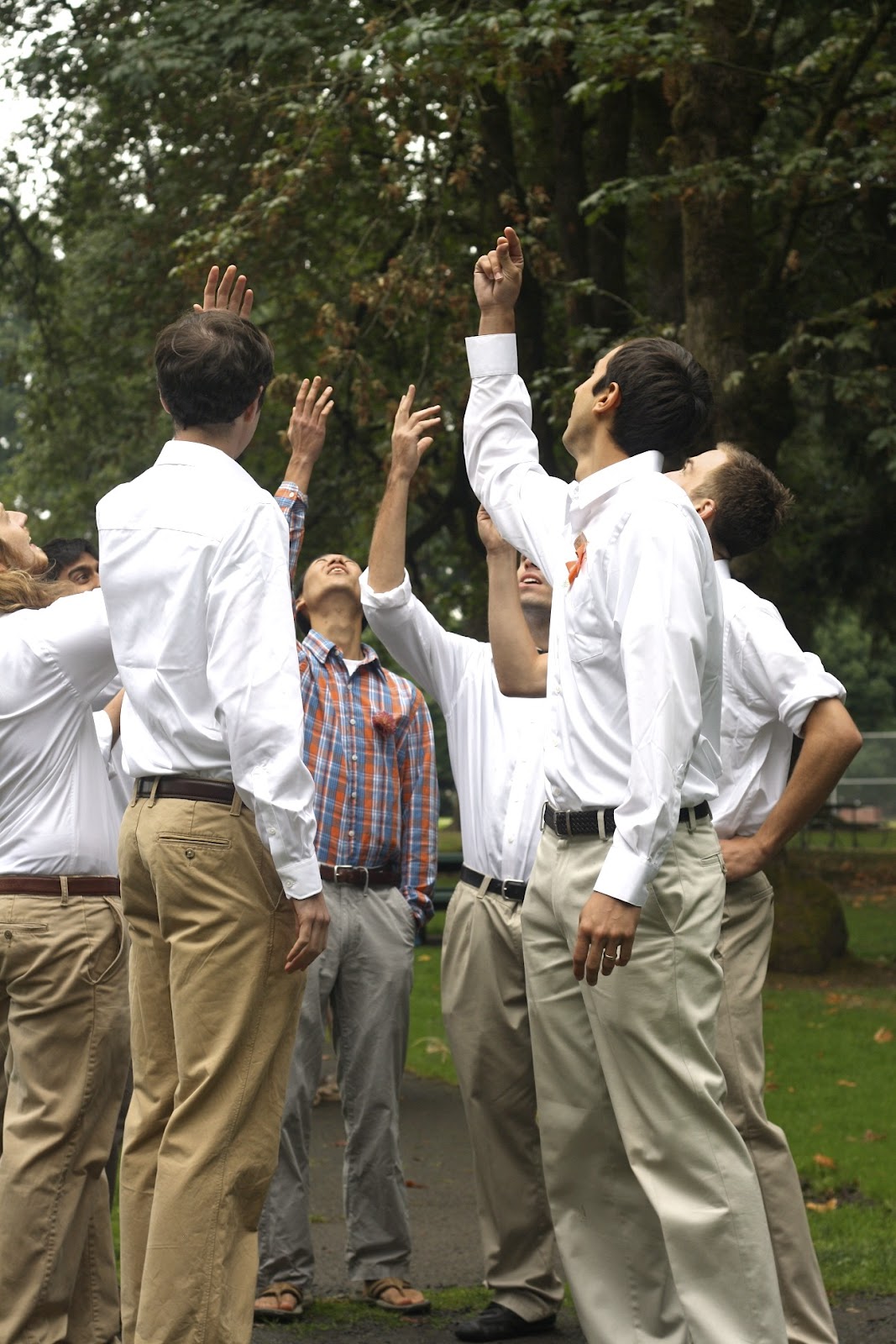

top 5 moment from the wedding
It’s an interesting point, and one well taken. Except for the part where I still got married. Documented here in my #1 most popular post: Pre-wedding running diary.
Anyways, the point remains that relationships are stressful during med school. Sidenote - if you believe what med students tell you about med school, it’s the equivalent of Vietnam crossed with giving birth, except more intense. Realistically, it’s probably like an overconsuming full-time job. Work 50 – 60 hours a week and struggle not to think about it at home, but it’s not quite running through jungles and getting shot at, and it’s probably manageable if you think about it. 


If I want to keep going down this track of hypercompetitive academia, it only gets harder. A few years ago, I worked in a lab at Harvard, where I mostly worked with one of the junior faculty, Dr. Liang. He was a fairly recent MD/PhD graduate that was trying to start up his own lab, and he told me about the interview process he went through at Harvard. Dr. Liang had concerns about the stress that a competitive environment might place on his family. The department chair gave him this advice: 


“The second wife is always happy.” 


The whole medical/research career track isn’t exactly family friendly. 
science in action


But like any difficult task, it can be done. There are neurosurgeons with healthy family lives and HHMI lab scientists known for prioritizing their kids' soccer games. I want to know how they did it, so I’m going to write a series of posts throughout my time at MUSC analyzing relationships during med school – primarily Katie and mine. Hopefully this will become my third book. 


Sidenote - the first two: 


1- token memoir of internship, aka rip-off of Sandeep Jahuar’s Intern


2- running interview with me on my cross-country road trip publicizing my first book, aka rip-off of David Foster Wallace’s Although Of Course You End Up Becoming Yourself


This is already getting long, so I’ll leave you with a question I’ve been wondering about. 


Is it easier for a power couple – both med students – or a couple where only one is a med student? 


My answer: it depends on the stage of life. During med school, it’s easier for a power couple since they experience all the same things, study together, suffer together, etc, but after med school, ESPECIALLY after residency when people start to transition from a “school” to a “real life” stage of life, it progressively gets easier for non power couples. 


Anyways, I welcome your opinion on this. 


See you on the other side, 


from ken 


Tell your friends about me.

The REAL reason I want to go to med school

One of the many place I pretended to care about people.
I have several friends going through the med school admissions process this year. Just having finished it, I am extremely worried for their mental health.


The process is a lot of acting. There’s a vague template that med schools want, and there’s unbelievable pressure to dress in suits and say cookie cutter snipits to please the all-powerful admissions committees. 


In order to appease such bureaucracy, I wrote a post last year [link to med school personal statement here] that evolved into my med school personal statement. To summarize: I want to be a doctor because I had been privileged and given the opportunity to flourish, so I wanted to lead a life where I could give other people that same chance. Medicine seemed perfect – I could turn people’s lives around. 


The personal statement is part of the reason I want to be a doctor, but it’s also the “best sounding” reason. Now that the powers-that-be have signed my acceptance letter, I can give you the top 3 REAL reasons why I chose med school: 


#3) The results are tangible. In the lab, I constantly struggle to sustain intrinsic motivation through countless failures. SO MANY long days are meaningless.  The clinic provides a lot more extrinsic motivation – patients come in, you try to help them, rinse, repeat.  


#2) My favorite show growing up: Scrubs. I'm hoping if I become a doctor I will become JD from Scrubs – over-the-top introspective, selfishly cares too much about other people, slowly develops as alpha male. So far it's working. I seriously debated for at least seven minutes the pro/cons of putting this as #1. 


Sidenote – Sandeep Jauhar wrote one of my favorite medical memoirs, Intern. Jauhar used to be a physics PhD student, but decided there wasn’t enough meaning in PhD research so he changed tracks to med school. The book is about his intern year, the first year of training after medical school. It’s infamous as the hardest year of medical training, and Jauhar writes a hilarious and honest record of the year. 


He describes one scene when he and the fellow interns are burnt out and giving all the wrong answers on rounds. The attending physician walks them over to the window, and points to the river, at a guy looking up at the hospital. He says: 


“That guy in the boat, looking at the hospital, do you know what that guy is thinking? I should have been a doctor.” 


#1) The scene struck a cord with me because the #1 reason I want to be a doctor is that I need my life to have meaning - I never want to be the guy in that boat. My life is a never-ending balance of comfort and meaning. Whenever life gets too easy I always question if my life is meaningless, and whenever my life is involved in too much stuff I feel like I'm teetering on the edge of sanity. 


Sacrificing time and mental sanity sucks, but I would rather struggle with burnout than meaninglessness. 


Sidenote – this desire to have a meaningful life is the #2 reason why I got married, but that’s a whole different post. 


See you on the other side, 


from ken 


Feel free to comment! I would love to hear your thoughts.

The Consequences of Caring

yeah, I had long hair once


"And there are those who give with pain, and that pain is their baptism."
    - The Prophet, K Gibran
-- 

Years ago, I was involved in competitive athletics. You might be surprised because I’m as skinny as a straw, and not like the ones you see in milkshakes, more like the ones you see in cocktail drinks, and you self-consciously wonder, “Is this to stir with? Or drink from? I’ll just watch what everyone else does.” Seriously, I still don’t know what I’m supposed to do with it. 

I used to run cross country for Kenyon, and five years into my competitive career I had a Steve Nash moment. Sitting in front of my locker. Another track season over, ending as usual in disappointment. I had come a long ways from where I started - I was a legitimate member of a collegiate cross country team, but I couldn’t help but remember a legendary running quote: 

“To give anything less than your best, is to sacrifice the gift.” 

I understood that my body had athletic limits, but it haunted me to consider that I could give more. Before I could put the period on the running chapter of my life, I had to confront the edge of my limits. 

That summer I lived in semi-isolation in Wyoming, and totaled over 1000 miles. A previous post. It was a daily ritual to run upwards of 20 miles. It was also a daily ritual to question what the f I was doing. 

When I got back to Kenyon, I had a pantheon cross country season. I shattered my personal bests and walked away from that season knowing I had given my best. But after a few weeks of sitting around, watching everyone else gearing up for indoor track, I knew I wasn’t ready to go back. I decided to train by myself and take a break from running. Mentally and emotionally, I was burnt toast. I never had another great running moment again. 

-- 
kind of looks like the gel took a poop

I’m currently training to become a scientist. I love my job, but there are moments when my head might explode. 

The two hardest parts of science:

1) It’s all behind-the-scenes, so it totally depends on my intrinsic motivation. All of my long days at the bench are only the first step for clinicians to come up with novel treatments. Is this doing anything for people? 

2) Experiments go wrong all the time. Some weeks I literally accomplish nothing.  Shouldn't I be sitting at home and watching funny youtube videos instead?

This past week was no good. I messed up my own experiments. I messed up my co-worker’s experiments. A lot of stuff went wrong, and it’s a daily ritual to question what the f I’m doing. 

For now, I love science, and I know caring about it gives me an edge. I’m in the lab early. I’m in the lab late. I obsess about doing everything right. I study all the little ticks that make baller scientists baller. But I know that same edge that gave me one great cross country season is the same edge that burned me out on running forever. I could see myself watching one last gel leak, not so calmly walking away, and never looking back. 
 
“The sharp edge of a razor is difficult to pass over; thus the wise say the path to Salvation is hard.” 
    - The Razor's Edge, epithet

See you on the other side, 

from ken 

-- 

The Champagne of Beers


“Watch where you’re FUCKING driving!” 

Standing in the middle of a crosswalk, I threw my hands up as a car cut me off. 

I’m tired. 

I’m tired of walking back and forth to the freaking store. I want a car. 

Of course, I had to pick out the heaviest possible groceries – whole wheat flour, plain yogurt, dried beans, six-pack of Miller High Life. 

My back hurts. This can’t be good for me. 

-- 

Sidenote – one of my top 2 influences is David Foster Wallace’s This Is Water, a commencement speech he gave at Kenyon. Sidenote-within-a-sidenote – the other, Mountains Beyond Mountain. Anyways, This Is Water is about two young fish swimming in a hurry. They run across an older fish that asks, “Howdy boys, how’s the water?” The fish continue on their way, but after a minute, one of the younger fish asks the other, “What’s water?” 

I loved the connection to Kenyon, I loved what DFW stood for, and I loved his edge, so I gave This Is Water to all my groomsmen as a wedding gift. I’ve been emailing with one of them about the significance of the book. For me, it boils down to the word, “This.” 

“This” represents the act of pausing and seeing the water around us. The currents flowing, krill swimming, whales giving chase.  

Sidenote2 - I read a couple of Bulls/Lakers/future-Heat coach Phil Jackson’s memoirs. My favorite was Sacred Hoops, a great read about the intersection of spirituality and basketball. What I took from it: 

The 90’s Bulls said the Lord’s Prayer before every game. I figured if it worked for the Bulls it would work for me, so I’ve been saying the Lord’s Prayer every time I shower. I imagine it helps me in the same way it helped the Bulls. Obviously, life gets tough for everyone - even the Bulls had tough losses, but at their core they were twelve guys that wanted to go down in the history books. With the Prayer, Jackson gave the team a few precious seconds to remember that they had to push through the struggle, and keep playing their game. 

That’s why the best part of This Is Water, is “This.” DFW knew the tough moments in life were the most crucial - that’s where the battle between good and evil exists. But sometimes, the hard part is noticing when we’re engaged in that battle. Sometimes it’s about taking that second to see the battle. 

-- 

After a grueling walk I made it home. I slammed my sweaty clothes in the laundry basket, still pissed off about everything. 

I wish I could just buy frozen burritos like my roommates. I wish I could drive to the store like them. 

As I turned on the shower I remembered. 

This is water. 

No, wait. I walked to the fridge. 

This is beer. 

Shower beers. Ah.

See you on the other side, 

from ken 

Feel free to comment! I would love to hear your thoughts.

Awkward pre-M1 summer


Jonah Lehrer’s is the new Malcolm Gladwell - super trendy pop science writer. Basically, a writing version of Jad from Radiolab. His newest book is, Imagine: How Creativity Works. Lehrer tries to demystify creativity, and splits the book in half explaining personal and group creativity. I loved the personal creativity part, a lot of ideas about how to have better ideas. It didn’t have a whole lot of ideas that felt new, but it’s always fun to read something that reasserts your own beliefs. Overall, it’s a great lay science read – definitely recommend. 


One point that touched close to home was the impact of moving on creativity. He highlighted David Byrne of the Talking Heads, who loved New York City because he could bike from Latin jazz club, to Nigerian music hall, to punk rock show. He eventually fused all of it to create the unique sound of the Talking Heads. New places give you a different taste of life.

Each stop I’ve made has introduced me to new people and challenged my endless philosophizing. But then, why don’t more people move? Why do Williams alums flock to Boston? Why is there a Kenyon bar in DC? 

Well, the awkward pre-M1 MD/PhD summer is a great example of why most people stay put. Sidenote – M1 stands for med school year 1, M3 is med school year 3, etc. 

As an MD/PhD student, I have the privilege? responsibility? of arriving early to start a summer rotation in a possible PhD lab. It would’ve been great to spend one last beautiful Portland summer with my friends, but here I am in the Charleston library. None of my classmates are here yet. The other MD/PhD students will be here in June or July, and my MD classmates won’t be here until August. I’m counting on school for about 80 - 90% of my community, so until then, I’m mostly hanging out with me. 

During the days, the lab keeps me busy. I'm in f-you-mode trying to carve out a potential PhD project. My goal is to get out in 6 years, below the average of 7.7 years, so I’m not planning on spending too much time at the bottom half of the learning curve. 

As an introvert it’s nice to have nights to myself, but it also gets boring. The time I would have spent at happy hour with my friends or chatting with my wife is now spent watching Scrubs or surfing the internet. I should probably read or write.. but I just don’t have the mental energy. 

Times like these I get why you wouldn’t leave your comfort zone – your old friends and routines. I know it’s just a temporary summer, so I’m ignoring it and forging through, but still.. 

See you on the other side, 

from ken 

Feel free to comment! I would love to hear your thoughts.

remix: notes outside the margin by a medical student seeking truth

I've decided to remix sidenote. Now it's, "notes outside the margin by a medical student seeking the truth." Part of what I originally wanted to establish through sidenote was a set of core themes for my life.  After sorting through all sorts of ideas for two years, I want to give sidenote a more distinct flavor.  I figure the main ideas I have to contribute will be as a married, early 20's, hippy-Christian, MD/PhD student, so for the time being I'm trying to focus sidenote on life during med school.  Anyways, the inagural post of sidenote v2.0 will be the updated "about" page.  Enjoy,

--


"Humanity, which they loved as we did – was for them something complete that must be maintained and protected.  For us, humanity was a distant goal toward which all men were moving, whose image no one knew, whose laws were nowhere written down.”   - Max Demian

Sidenote is a concept originally invented in a summer email chain by Iyer, A* and Noguchi, K*, 2008. 

--

Imagine you’re fourteen, puberty hormones are rushing through your veins, you’re stuck sitting in Sunday school, and all you can think about is sex.  The teacher is up there lecturing about Cain and Abel.  Abel was the good brother, Abel provided God with great offerings, Cain grew jealous, Cain murdered Abel, and in doing so he became the first human. 

You’re fourteen, so by now you’ve heard this story a million times, and you’re definitely zoning out.  Maybe your unconscious drifts off into that creative zone, and instead of writing in the margins, you start scribbling outside the margins, writing "Cain and Abel; The Remix". 

Behind closed doors, Abel had been threatening Cain and stealing his crops.  One day, Cain stood up for himself, fought back against his brother, and killed him.  Abel was everyone's homie, so everyone assumed Cain was the bad guy.  I’m not saying that’s the truth, but is it possible that there was more to it than the cut-and-dry story that everyone agrees on? 

Sidenote is about searching for the truth.  Sidenote believes that the truth is complex.  Sidenote believes you should listen to your heart.  What would the world look like if people took sidenotes seriously?

That is the sort of world Sidenote envisions.  It might be a better world, it might be a less productive world, it’s hard to say, but one thing is certain, it would be different.  At it’s core that’s all Sidenote envisions.  An alternative to the current reality.  

This blog chronicles my vain attempt to understand the truth.  I have chosen to discover the truth through marriage, medicine, relationships, Scrubs, Christianity, and basketball, so you'll mainly hear about those few topics.  They all have their ups and downs, but I believe they will eventually lead me to the truth.  At the very least, I'm hoping to become JD from Scrubs.
See you on the other side,

from ken

(*both authors contributed equally to this work)

What I believe: post-Portland-sabbath


“Be the change you wish to see in the world.” 

- Gandhi 

In college this was one of my top three favorite quotes. Of course, then I got to thinking, what do I want to see in the world? I self-righteously decided the world needed more selflessness, so I threw myself into a world of activism. It was great, and I’d love to go work in Haiti someday, but most days the politics of activism is too much for me to handle. But then.. what is the change I wish to see in the world? 

Post-college I spent two years in Portland – where young people go to retire. After the intensity of undergrad – studying non-stop, gunning through experiments to finish a research thesis, interval after interval of track workouts, long nights spent causing havoc – working 40 hours a week left me uninspired and lazy. That said, Portland gave me tons of time to reflect, and develop my core philosophies. 

Sidenote - I imagined Portland being a stage of life similar to when Jesus went to the Mount of Olives to get the hell away from everyone, meditate, and contemplate life. Maybe he was going through a quarter life crisis too – “What do all these people want from me? What should I do with my life?” 

Anyways, in this time I read a book Katie owned called This I Believe: The Personal Philosophies of Remarkable Men and Women. It’s what it sounds like – a compilation of personal credos written by a wide range of people from bartenders to Helen Keller. It has a slew of great ones like “There’s No Such Thing as Too Much Barbeque.” 

Sidenote – my favorite personal credo? David Foster Wallace’s This is Water. It’s actually a commencement speech he gave at Kenyon College. I would say he believes in the struggle of life, it's extremely close to how I experience life. 

So this bring me back to my own core philosophies - what do I believe? Well, I believe life is a gray scale, and it can’t really be boiled down to simple maxims. I believe there are many roads to the truth. Some days I believe in fate, but most days I believe an individual determines their own fate. I believe in God and a higher power than myself. I believe in Kobe Bryant more than Chris Paul (this is definitely a future post, Kobe is the best player of the 21st century). Each of these could be its own post, but underneath all the complexity I believe in one important thing. 

I believe in friends. 

I’ve learned a lot of things in my 23 years of life, but the main thing I’ve learned is that life is about the same for most people. Rich or poor, drug addict or professional athlete, Harvard or UMass, stay-at-home mom or trophy husband, people aren’t that different. Life is hard for everyone, nobody's struggles are "not a big deal", and no one should be expected to survive by themselves. 

There’s nothing like going to a bar with a good friend and breaking down the latest struggles of life. Or going for a long run without saying a single word and just getting away from life. I could ramble on, but I’ll stop here since I’m already getting too long.

See you on the other side, 

from ken 

Ken Noguchi has made friends in Maryland, Massachusetts, Ohio, Wyoming, Oregon, and currently makes friends in South Carolina. He is attending school in hopes of producing the second and third coming of Gleevac. When he grows up, he hopes to be his daughter’s favorite comedian.  

Feel free to comment! I would love to hear your thoughts.

NBA playoff predictions


Sidenote - I wrote these thoughts before the playoffs started.

Here are my thoughts on the NBA playoffs. In no real order: 

First, the Vegas odds for the winner: 

Heat 3/2 
Bulls 3/1 
Thunder 4/1 
Spurs 6/1 
Lakers 12/1 
Celtics 15/1 
Knicks 18/1 
Clip 20/1 
Griz 25/1 
Pacers 40/1 

So the Heat are the favorite again, but if they miss out again, what do they do? Do you just keep playing and assume you’ll get the breaks eventually, or jump for a big move? If I’m the Heat I’m dealing Dwayne Wade for a big guy. Unleash LeBron as the alpha dog, use Bosh as the secondary scorer, add the third guy who can grab rebounds and score from the post, and surround them with a bunch of guys that can knock down jump shots and run around on defense. Couldn’t you swing Wade for Dwight Howard? Keep Wade in Florida, drop Howard off to a contender, everyone’s happy. Or what about Wade for Blake Griffin? If CP3 leaves Blake isn’t sticking around anyways. 

I went to ESPN.com and researched random statistics. The Spurs are the only team with three players in the top twenty for PER. I don’t know what that means – but it must mean something. 

Here are my teams that could win it all: Heat, Bulls, Thunder, Spurs, Lakers, Celtics. The Celtics are the only sleeper team that could win it all. They have three or four players that could absolutely take over a game (KG is a maybe). Couldn’t you see Ray Allen sinking eight 3’s in a game? Rajondo triple doubles are a norm. I’ll definitely be rooting for one last run from the big3. 

Sidenote – I love that the Celtics are still considered a big 3, when their alpha dog player isn’t even part of the big 3. At this point that team is like Rondo and friends. 

If anyone could be a catch-lightning-in-a-bottle type teams, I could see the Knicks. Carmelo – despite his lack of hustle is one of my favorite players. If he decided to take up jogging as an off-season hobby, took some responsibility and stopped complaining so much, he’d be a perennial MVP candidate. I swear, intangibles are so freaking important. How much would NBA teams be willing to pay if I could discover a way to instill intangibles? 

If I was a gambling man, I’d pick the Spurs. They seem like the one team that could sustain a big injury and still dominate. I watched them only once, and they have some great role players but they’re just so small, so they could get steamrolled by a Grizzlies or Lakers. At the same time, they have to be the best rested team – Ginobili’s barely been unleashed. 

I wouldn’t consider myself a Celtics fan, even though I grew up near Boston, so I’ve been hoping to adopt an NBA team. Does anyone have any suggestions? I’m leaning towards watching half a decade of Linsanity/Melo. 

See you on the other side, 

from ken  

Feel free to comment! I would love to hear your thoughts.

My Pillars Theory to Life


I recently picked up season one of “Men of a Certain Age.” It’s a TNT show made by Ray Romano (Everybody loves Raymond). It’s about three best friends who are dealing with the realities of middle age. One character is a divorcee trying to work out his new relationship with his kids, another is a struggling actor trying to sustain an LA 20’s to 30’s lifestyle of expensive fun and cheap sex, and a third is a family-man with the usual family struggles – paying for a mortgage, losing weight, and maintaining a healthy marriage. 

Apparently, the show got cancelled during season 2 so other people didn’t share my love for this show, but I did draw an interesting insight from the show: 

 “The grand essentials to happiness are something to do, something to love, and something to hope for.” 

-- 

I love this idea because it ties into my theory of multi-facetedness. 

Sidenote - Back in college, my friend Amulya and I had this theory of the three pillars. 


Primarily, we valued three things. 

Athletics – I was a cross country and track runner in college, and Amulya was an ultimate Frisbee player, so a lot of our worth was determined by our current athletic success. 

Academics – we were both pre-med Bio majors, so we were grade-conscious. 

Adult women – we were girl crazy, so what. 

Whenever we chatted, we’d assess our lives in terms of the pillars, talk about which pillar was the highest and doing the best, which we’d been neglecting to work on, and so on. 

I’m not sure if the pillar imagery is the perfect metaphor, but our idea was that as long as we were doing well at athletics, academics, or adult women it would sustain our happiness. 

Basically, my theory of multi-facetedness was about spreading your efforts out, and doing different things with your time. 

-- 

To go back to the quote: 

“The grand essentials to happiness are something to do, something to love, and something to hope for.” 

The reason I love this insight is because it takes this theory of multi-facetedness to another, more complicated level, and I love analyzing complicated life theories. Not only do you need to do different things, they need to provide your life with different feelings. 

Something to do – I see this as your day job, your errands. Things that keep you busy enough that you don’t get lost in the bullshit floating inside your head. Also something that pays the bills. 

Something to love – I see this as your family, your friends, and your hobbies. The part of life that keeps you inspired, happy, and hopefully, sane.

Something to hope for – These should keep you afloat on the days the things you do and the things you love are a greater struggle than usual. They provide inspiration to get through the day-to-day. 

-- 

So the modified pillars looks like this: 


I think I like it better, but I'll probably have to think about it more. Especially the "something to love" part.

See you on the other side, 

from ken  

Feel free to comment! I would love to hear your thoughts.

How do I choose a PhD lab?


 This weekend I’m flying to sunny Charleston, SC to visit the Medical University of South Carolina. I’m visiting nine potential PhD mentors with a great range of science, but as always, I’m planning to choose my PhD lab based on intangibles. 


So I’ve come up with three key intangibles, and ten tangible questions to figure out if the lab is a good intangible fit. 

Sidenote - In case you don’t want to keep reading, here are the three key intangibles: personal happiness, quality of education, job potential. 

-- 

Intangible #1) Personal Happiness 

Question #1) How friendly is the boss? 

I’m not saying I have to be best buddies with my boss, I just like being liked. 

Question #2) How friendly are the other students/postdocs/techs? 

I have a theory that the number one factor in how much you like your job is how much you like your co-workers. 

Question #3) How long have the technicians been with the lab? 

If a tech has been with the lab for 5+ years, then you know the boss takes care of their own. 

Question #4) How many hours per week should I work? 

I like working hard, but I want it to be my choice to spend long days in the lab. I’m an adult, I expect to be treated like one. 

Intangible #2) Quality of Education 

Question #5) How long does the average student take to graduate? 

Question #6) Are there clear guidelines for graduation? 

Question #7) Have you mentored prior MD/PhD students? 

These three questions kind of get at the same thing, but it’s critical. MD/PhD programs are so long (average of 8 years) that I don’t want to waste any time. I want my goals to be clear, so I can accomplish them, and move on. 

Question #8) How often does the boss meet with students? 

I want clear guidance, but not someone looking over my shoulder. Ideally, I’d say I’d like to meet with my boss every other week to go over my data. My track record is good, leave me alone and let me do my thing. 

Intangible #3) Job Potential 

Question #9) Do you have lots of ideas for projects? 

I’ve been in labs that are like project deserts. If there are only a couple good projects, they’ll go straight to the senior members of the lab, and I’ll be left with the high-risk dead end projects. 

Question #10) How legit is the research? 

One of my many goals is to be a leader in science. I want to run a lab with thirty people and empower people to do great science. I want to write grants all day and help people become the best scientists they can. To reach this position, I’ll need a lot of scientific success – which means lots of top-of-the-line publications. 

-- 

So anyways, those are the ten tangible questions. I’ve equipped myself with worksheets to grade each potential PhD mentor on these ten questions. They will each receive a grade out of 100. Eventually I’ll make my final decision based on impulse instead of this rational process, but at least this has entertained me. 

See you on the other side, 

from ken  

Feel free to comment! I would love to hear your thoughts.